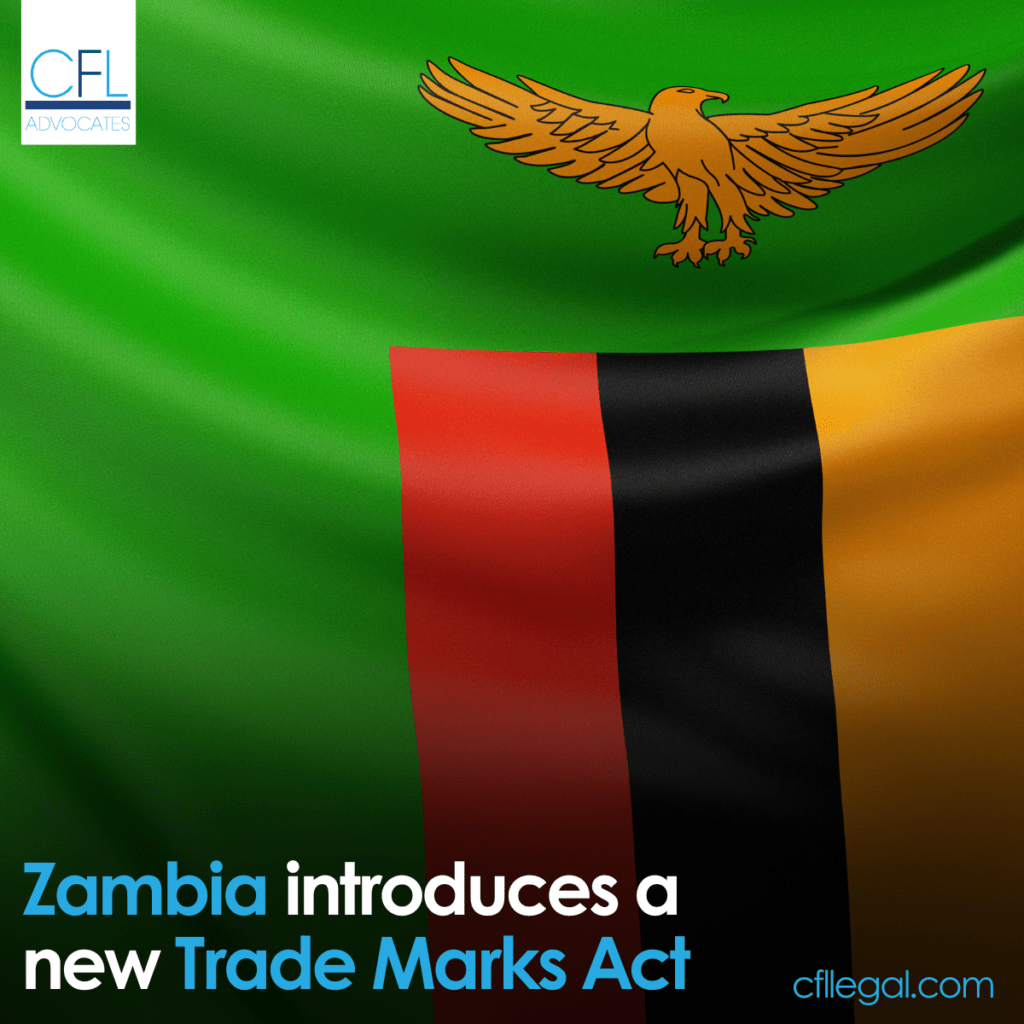
On 31 December 2025, Zambia completed a significant overhaul of its trade mark regime with the operationalisation of the Trade Marks Act No. 11 of 2023, following the signing of Statutory Instrument No. 86 of 2025.
The new Act repeals the Trade Marks Act of 1958 and represents a decisive move towards aligning Zambia’s trade mark system with modern international standards and global best practice.
While implementing regulations are expected to follow, the Act is now in force and introduces several important changes that brand owners and practitioners should be aware of.
What this means for trade mark owners and practitioners
1. Formal registration of service marks
Zambia now allows the formal registration of service marks, a significant development for brand owners. Previously, protection was often indirect or limited through registration in goods classes. Under the new Act, comprehensive coverage is available for service classes, aligning Zambia with international trade mark practice.
Practical impact: Businesses offering services in or into Zambia should urgently consider filing service mark applications to protect existing use.
2. Domestic implementation of the Madrid Protocol
The Act domesticates Zambia’s accession to the Madrid Protocol, enabling trade mark owners to designate Zambia through International Registrations. Although further procedural guidance is expected by way of regulations, the legislative framework is now firmly in place.
3. Uniform 10-year term of protection
Trade mark registrations and renewals will now run for a standard term of 10 years. Marks registered under the previous legislation remain valid until their current expiry dates, after which renewals will be governed by the new Act.
4. Introduction of multi-class applications
Applicants may now file a single application covering multiple classes of goods and services, simplifying filing strategies and portfolio management. Until new regulations are issued, official fees remain payable on a per-class basis.
5. Recognition of new categories of trade marks
The Act introduces protection for:
- Collective marks
- Geographical indications (GIs)
It also expressly recognises non-traditional marks, including sounds, shapes, colours, smells, and packaging configurations, subject to registrability requirements.
6. Enhanced protection for well-known marks
The Act provides formal recognition of well-known marks, strengthening enforcement options even where such marks are not registered in Zambia.
7. Stronger enforcement mechanisms
New civil, criminal, and border-control measures have been introduced, reinforcing Zambia’s ability to combat counterfeiting and trade mark infringement.
Key takeaway and recommended action
The new Trade Marks Act significantly modernises Zambia’s IP framework and creates immediate opportunities for rights holders, particularly those offering services.
We strongly recommend that:
- Owners of service marks currently in use in Zambia file applications without delay; and
- Existing trade mark portfolios be reviewed for class coverage, renewal strategy, and eligibility for multi-class filings.
For advice on how these changes affect your trade mark rights in Zambia, please contact our Intellectual Property team at cfltrademarks@cfllegal.com.