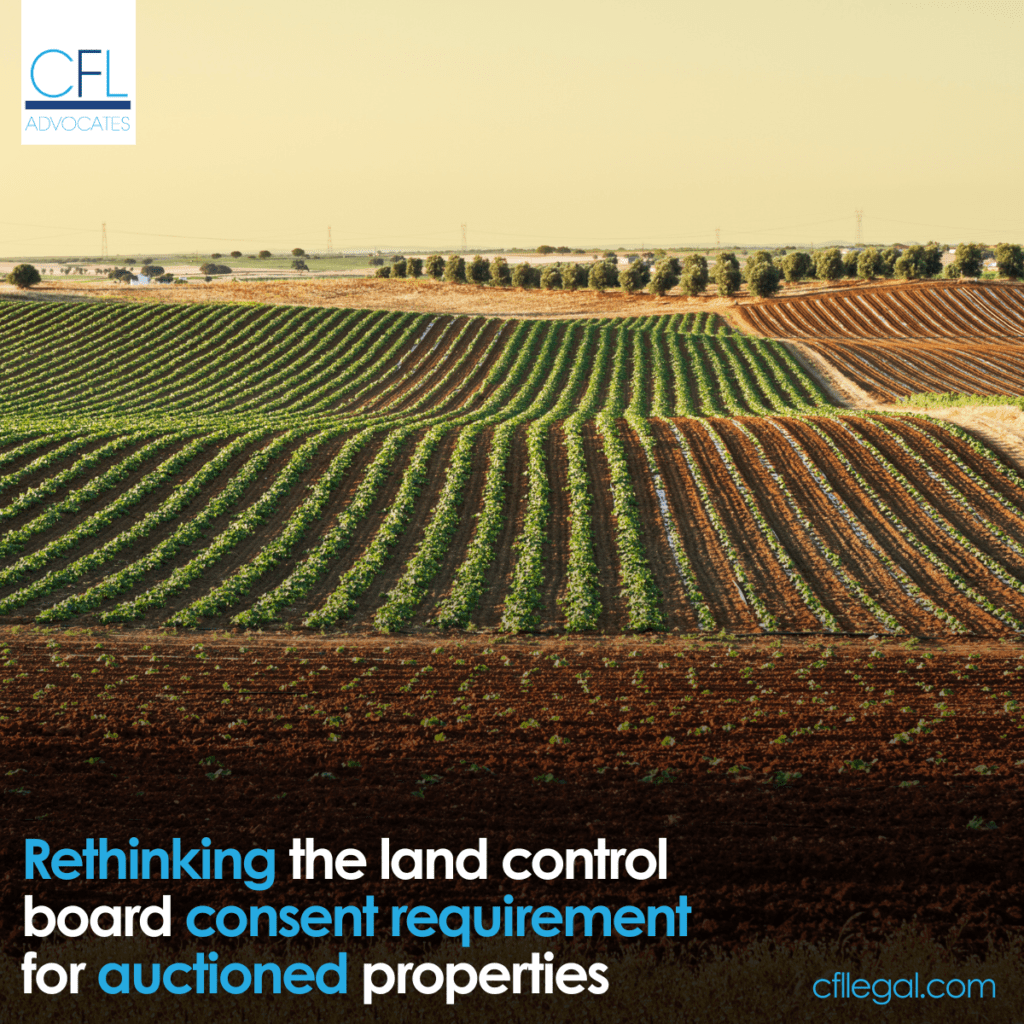
The Land Control Act, Cap 302 Laws of Kenya, presently governs issues of consent needed when dealing with agricultural land, which is defined as land that is not within a municipality or a township.
The Land Control Bill 2023 currently at the legislative stage of the National Assembly, seeks to repeal and replace Cap 302 to align the law governing dealings in agricultural land with the provisions of the Constitution of Kenya 2010, the Environment and Land Court Act, 2011, the Land Registration Act, 2012, and the Land Act, 2012.
One problematic area that remains unaddressed even in this Bill is the issue of consents when financiers are exercising their statutory power of sale on controlled land. Both Cap 302 and the Bill require consent to be obtained when a financier/chargee is exercising their statutory power of sale.
Typically, the defaulting party is at odds with the financier. Attempts by the financier to carry out valuation or procure consent at the Land Control Boards are met with great hostility. Although recourse lies at the appeal board, many, if not all, boards are non-existent, only appearing on paper and not on the ground.
Consequently, financiers and subsequent purchasers of auctioned agricultural land face significant challenges when confronting an uncooperative board that tends to favor the defaulting party, to the detriment of those seeking to recover losses.
Given these circumstances, it is timely to reconsider the necessity of obtaining consents from Land Control Boards for auctioned properties in order to foster a more favorable banking environment.
For more information, please reach us at info@cfllegal.com.