
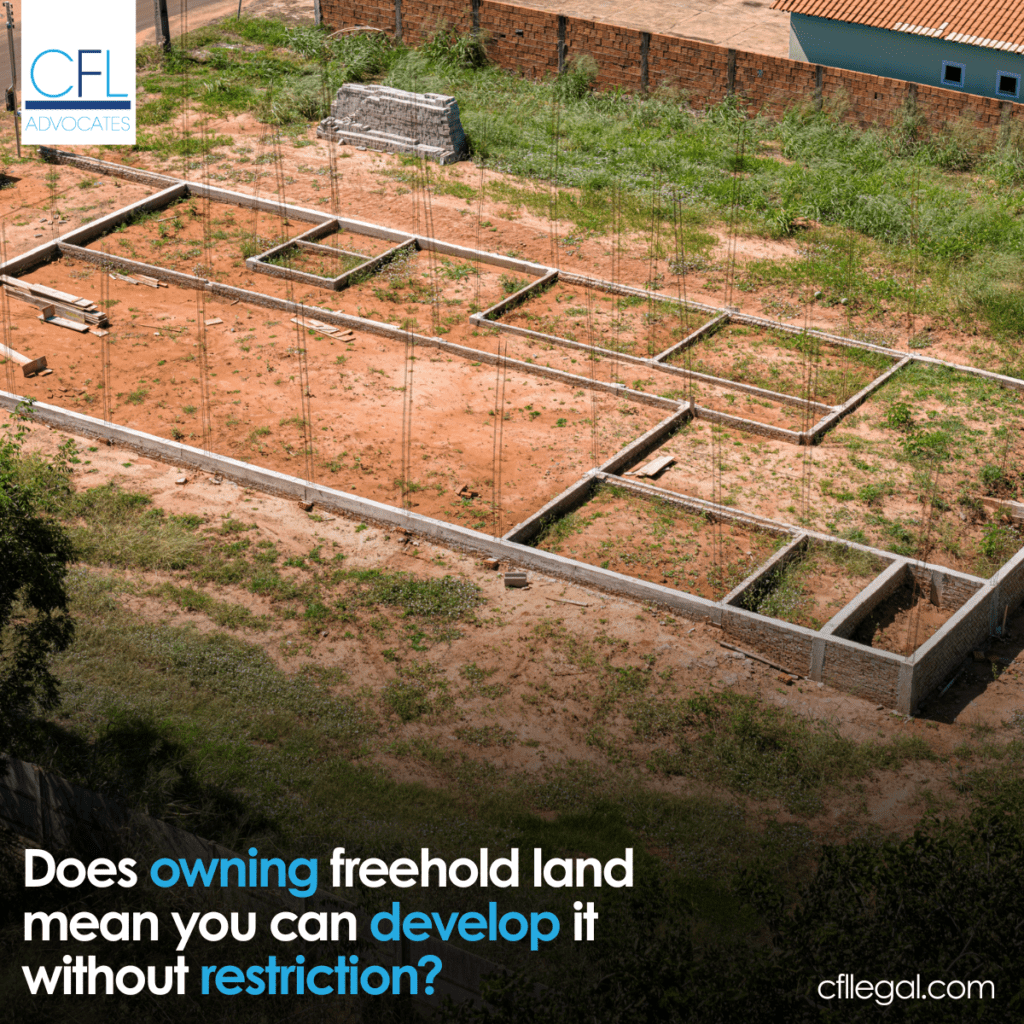
Freehold grants the proprietor indefinite rights to the property. Section 2 of the Land Act,2012 defines it as “the perpetual and unlimited right to use and dispose of land, subject to the rights of others and the regulatory powers of the governments and relevant state organs”. However, a closer examination of this section reveals that freehold ownership is subject to important restrictions. These include the state’s power of compulsory acquisition, limitations on the ownership of resources, such as minerals, and developmental control.
Legal framework on development control in Kenya
Development control is primarily governed by Part IV of the Physical and Land Use Planning Act, Cap 303 (the “Act”), together with several subsidiary legislations. Section 2 of the Act defines development control as “regulation of building works on land or the making of significant changes in land use to ensure compliance with rules issued by the planning authority.” County governments are empowered to undertake development control within their respective counties, and the county executive committee member exercises this authority.
Restrictions on freehold rights under the development control framework
All landowners, including freehold property owners, must comply with development control regulations. Proprietors are required to comply with county-specific zoning regulations and to obtain development permissions from the county government before undertaking significant works on their land. Such activities include changing or extending land use, subdividing or amalgamating land, and seeking approval for building plans.
County executive committee members may serve enforcement notices to property owners or developers who undertake development without the necessary approvals or who fail to comply with approved permissions. Courts may also impose penalties on proprietors who fail to obtain the required development permissions, including a fine not exceeding five hundred thousand shillings, imprisonment for a term not exceeding two months or both.
Beyond the requisite county governments’ approvals, there are various other statutory approvals required before commencing any developments on land, particularly the construction of buildings. These include:
a. National Environment Management Authority environmental impact assessment (EIA) license to allow implementation of projects;
b. National Construction Authority Project Registration;
c. The Kenya Railways Corporation Approval for developments near a railway reserve; and
d. Kenya Civil Aviation Authority Approval for developments within close proximity to any aerodrome.
Conclusion.
In Kenya, freehold land tenure grants proprietors substantial rights over the property, but it does not confer total unrestricted ownership. The law subjects freehold proprietors to various restrictions, including those under the development control framework. Moreover, it requires land owners to comply with this framework by obtaining and adhering to development permissions, and it imposes penalties for non-compliance.
Should you require any further information, do contact us at info@cfllegal.com.