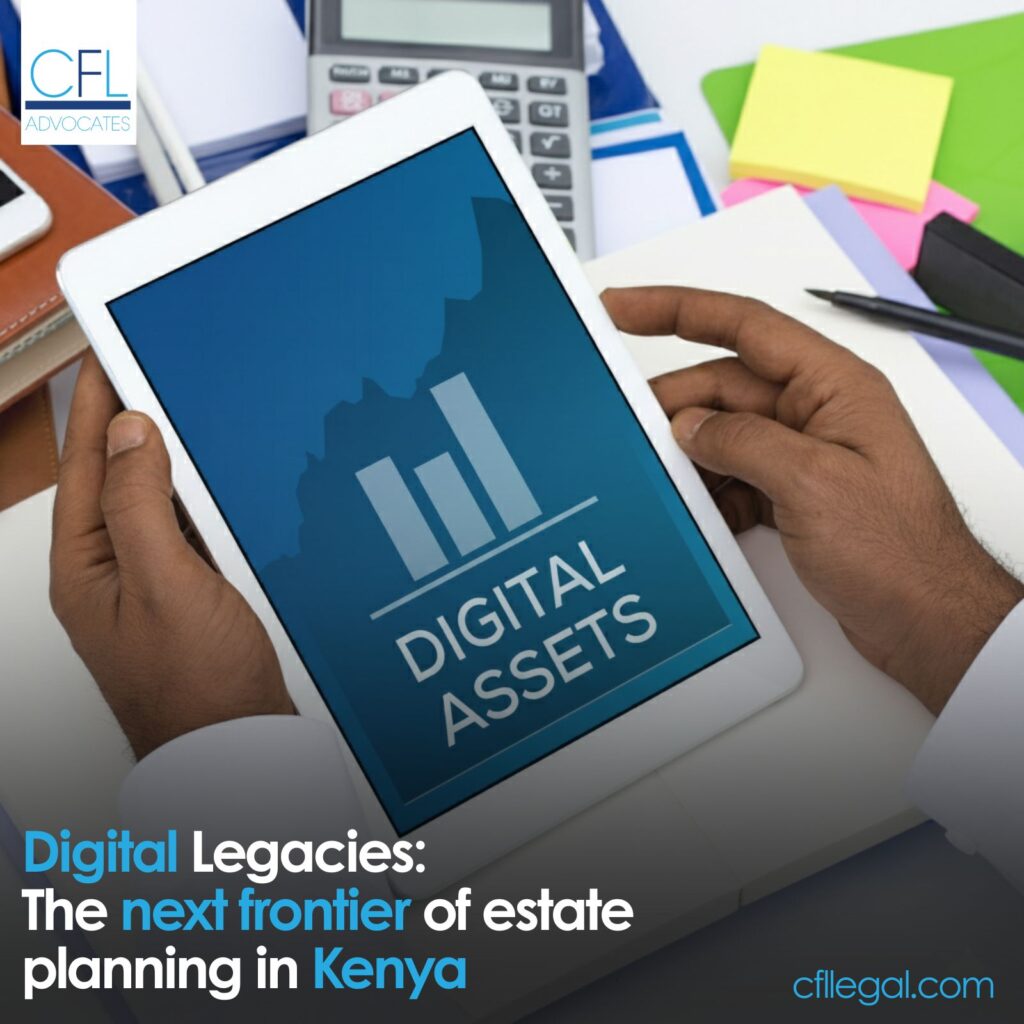
For many Kenyans, digital assets such as social media accounts, cloud photo libraries, e-mail, domain names, online businesses, loyalty points, mobile-money wallets, and increasingly cryptocurrencies and tokens hold financial, sentimental or business value.
Yet, while land titles, bank accounts, and vehicles are routinely included in wills, few people consider including their digital assets in their estate plans. As digital finance and online entrepreneurship expand, the question of what happens to one’s digital assets after death has become one of the most pressing and least understood issues in estate planning today.
Why digital-asset planning matters in Kenya
- Digital wealth is now mainstream.
Kenyans use mobile money (M-Pesa), online trading platforms and social media daily. Entrepreneurs equally run e-commerce stores and many individuals hold cryptocurrency or token investments. Without clear instructions, families can lose access to these assets or face long and costly legal processes trying to recover them.
- Regulation is catching up.
The Virtual Asset Service Providers (VASP) Act seeks to regulate cryptocurrency exchanges and custodians, shaping how these platforms handle digital accounts when a user dies.
- Succession law is still silent.
The Law of Succession Act and related statutes do not define “digital assets,” leaving administrators to navigate grey areas around ownership, access and privacy. In practice, families often face significant technical and legal hurdles to recover these assets.
Defining the modern estate: what counts as a digital asset?
A “digital asset” covers far more than cryptocurrency. In estate planning, it includes:
- Financial assets: crypto, tokens, mobile wallets (e.g., M-Pesa business accounts) or online brokerage accounts.
- Personal accounts: emails, social media, digital photos and subscriptions.
- Online business assets: domain names, websites, intellectual property, e-commerce platforms.
- Access tools: passwords, seed phrases, authentication apps or password managers.
These categories highlight how today’s estates are no longer purely physical as they extend into the cloud, across devices and over multiple digital jurisdictions.
Digital assets have turned ordinary estates into complex, cross-border and technical puzzles. The smart move is not to be techno-paranoid or techno-naïve but to remain practical, precise and proactive. This begins with integrating digital assets in every estate plan as it will safeguard not just wealth, but legacy. When it comes to your online world, the question is no longer if it matters but whether your loved ones will be able to find it when you’re gone.
Should you require any further information, do contact us at info@cfllegal.com.